

If Provence rosé is the wine of summer, Cinsault is one of the grapes responsible for making it so. It is one of the most celebrated rosé grapes in the world — and one of the least talked about.
Here is everything you need to know about Cinsault, why it makes such brilliant rosé, and where to find it.
WHERE DOES CINSAULT COME FROM?
Cinsault (pronounced san-SOH) is an ancient grape variety native to southern France. It has been grown in the Languedoc and Provence regions for centuries, and is also widely planted across North Africa, South Africa, and Lebanon.
It is a workhorse grape — prolific, heat-tolerant, and well-suited to the warm, dry Mediterranean climate. But when farmed carefully and used for rosé, it produces something genuinely special.
WHAT MAKES CINSAULT IDEAL FOR ROSÉ?
Cinsault has naturally thin skins, which means less colour and tannin extraction during winemaking. This gives rosé made from Cinsault its characteristic pale pink colour and delicate texture.
The grape also has naturally high acidity and fresh, vibrant fruit character — strawberry, watermelon, cranberry, and subtle floral notes. These are exactly the qualities you want in a great rosé: freshness, fruit, and a clean, dry finish.
Many of the most celebrated Provence rosés — the ones in the pale pink bottles that you see everywhere in summer — include a significant proportion of Cinsault in the blend.
IS CINSAULT ROSÉ ALWAYS PALE?
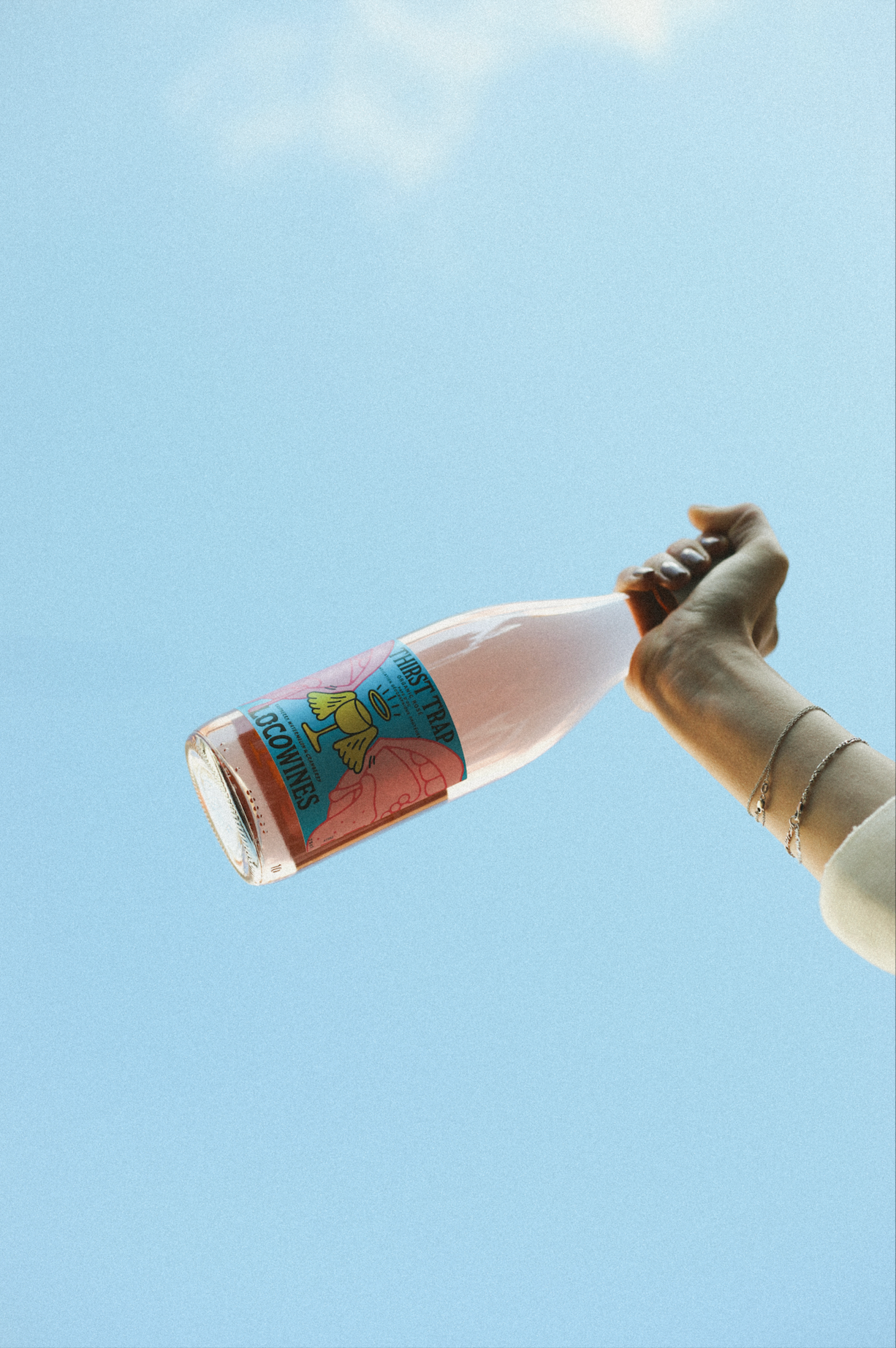
Cinsault tends to produce lighter-coloured rosé than varieties like Grenache or Syrah. Thirst Trap, Loco Wines' organic Cinsault rosé, is pale pink — exactly the colour that signals freshness and delicacy in a rosé.
Do not mistake pale colour for lack of flavour. Thirst Trap blind-tasted ahead of top-end Provence rosés costing significantly more. The colour is gentle. The flavour is anything but.
WHAT DOES CINSAULT ROSÉ TASTE LIKE?
Fresh, vibrant, and dangerously drinkable. Expect strawberry, watermelon, and cranberry on the nose — bright, summery, and immediately appealing. On the palate, Cinsault rosé tends to be dry, light-bodied, and refreshing, with a clean finish that makes you reach for another glass before you have finished the first.
It is the opposite of heavy or cloying. It is rosé that fits the moment — a sunny garden, a shared lunch, a spontaneous Tuesday evening that turns into something better.
THIRST TRAP — 100% ORGANIC CINSAULT FROM PAYS D'OC
Thirst Trap is Loco Wines' organic rosé — 100% Cinsault from the Pays d'Oc region of the South of France. Certified organic, vegan friendly, and made with the same minimal intervention approach that runs through the whole Loco range.
Strawberry, watermelon, and cranberry. Smooth, crushable, and made for summer. The drink of the season.
Share:
WHAT IS GRÜNER VELTLINER? THE AUSTRIA WHITE WINE YOU NEED TO KNOW
WHAT IS VERDEJO? THE SPANISH GRAPE BEHIND SKIN DEEP