

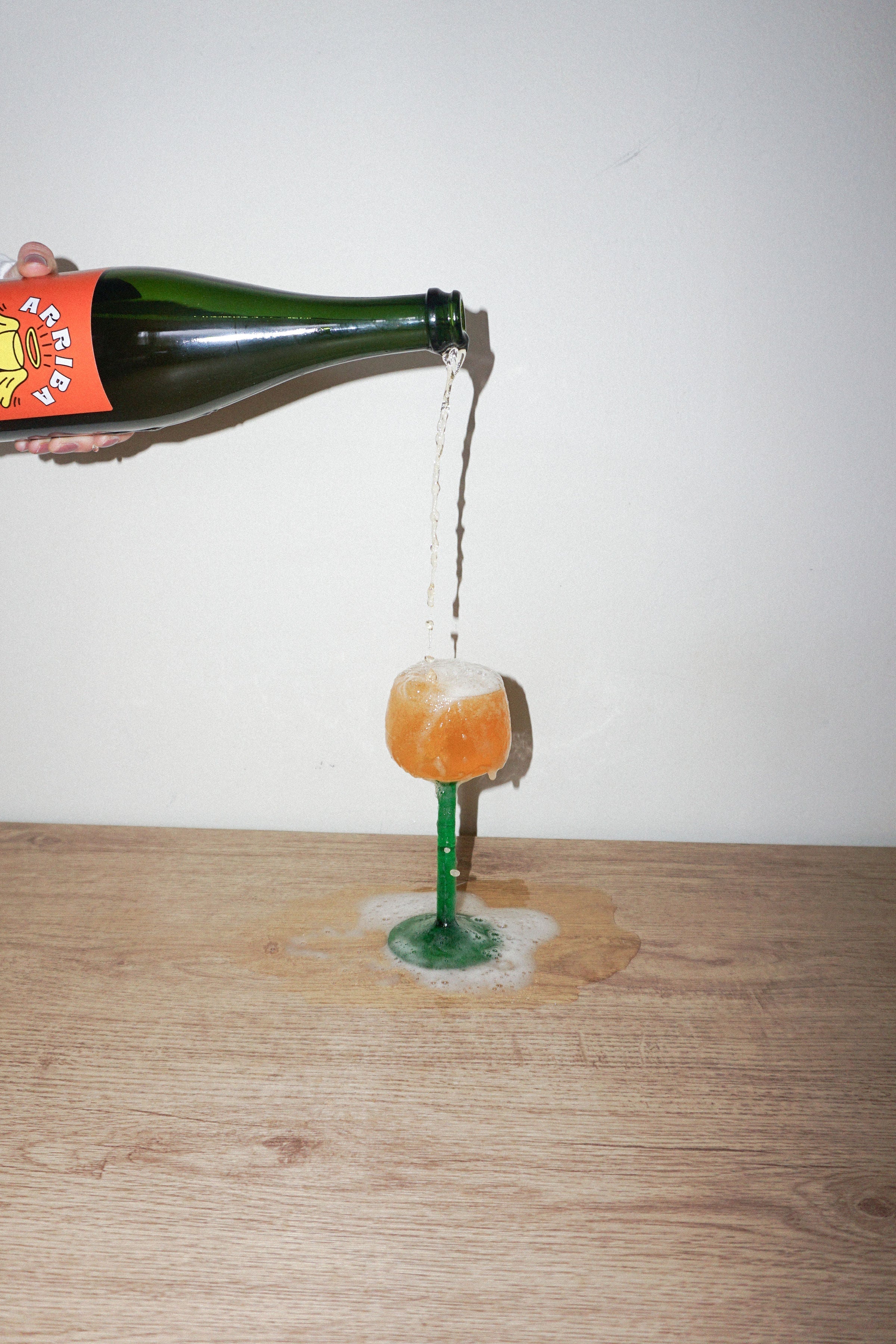
Parellada is one of the three traditional grapes of Cava — Spain's celebrated sparkling wine. But in the right hands, on the right land, it produces something far more interesting than conventional Cava.
WHERE DOES PARELLADA COME FROM?
Parellada is a white grape variety native to Catalonia, particularly the Penedès region of northeastern Spain. It is one of three grapes traditionally used in Cava production alongside Macabeo and Xarel·lo.
The grape tends to grow at higher altitudes where cooler temperatures preserve its natural acidity and delicate aromatics. Marc and Miriam, who supply Loco Wines with Arriba, grow Parellada on 50-year-old vines in a natural amphitheatre vineyard in Penedès.
WHAT DOES PARELLADA TASTE LIKE?
Parellada makes wines with delicate floral aromatics, crisp acidity, and light body. You get hints of citrus blossom, green apple, lemon, and subtle tropical fruit — particularly when the vines are old and the yields are low.
Old vine Parellada — like the 50-year-old vines Marc and Miriam cultivate — produces fruit with far more concentration and complexity than younger vines. The roots go deep, the yields are lower, and the flavour is more intense.
PARELLADA IN ARRIBA
Arriba takes 100% Parellada and turns it into a sparkling orange wine through 7 days of skin contact fermentation followed by bottling mid-fermentation to capture natural bubbles. The result is vibrantly tropical — pineapple, passion fruit, and lemon zest — with a gentle amber colour, natural bubbles, and a crisp finish. Available at locowines.co.uk.
Share:
WHAT IS VERDEJO? THE SPANISH GRAPE BEHIND SKIN DEEP
WHAT IS RIESLING? AND WHY RIZZLING WILL CONVERT YOU